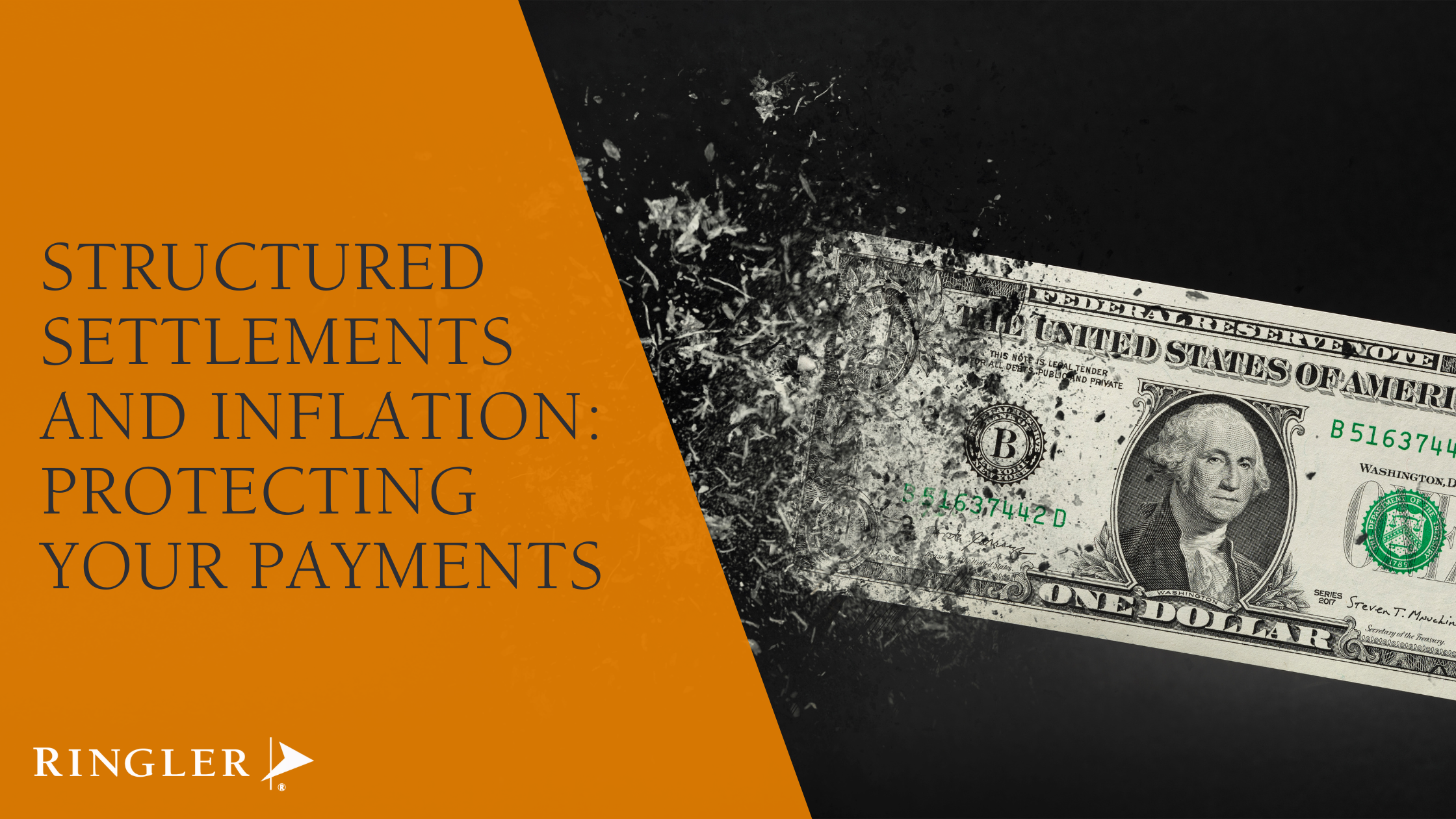
Structured settlements offer financial security by providing predictable, tax-free payments over time—often for the rest of a person’s life. But in a world where prices continue to rise, one question becomes more urgent: How does inflation impact a structured settlement, and what can be done to protect its value?
This blog post explores the relationship between inflation and structured settlements, outlining key considerations and strategies to help recipients safeguard their long-term financial well-being.
Inflation is the gradual increase in the cost of goods and services over time. While annual inflation may seem modest in any given year, its compounding effect can significantly erode purchasing power over a decade or more.
Even small price increases can have a significant impact on individuals who rely on structured settlement payments to cover medical costs, daily living expenses, or long-term care. For example, a $2,000 monthly payment that feels sufficient today may not meet the same needs ten or twenty years from now if inflation continues to rise.
Traditional structured settlements are fixed. This means the monthly or yearly amount received remains the same throughout the payment period. This predictability is a key strength, particularly when compared to market-dependent options. However, it also means structured settlements do not automatically adjust for inflation unless specifically designed to do so.
Fortunately, structured settlements can be tailored to include built-in inflation protection—but this must be addressed at the time the settlement is created.
One effective way to protect settlement payments from inflation is to include a cost-of-living adjustment (COLA). A COLA increases payment amounts annually, typically by a fixed percentage (e.g., 2% or 3%) or in accordance with the Consumer Price Index (CPI).
While including a COLA often reduces the initial payment amount compared to a fixed structure, the growing payments over time help protect against inflation’s impact. This can be especially important for younger claimants or those with long-term medical or care needs.
Another strategy involves combining periodic payments with strategic lump sums. For instance, a structured settlement might provide annual payments for income needs, with larger lump sums scheduled every five to ten years. These lump sums can be adjusted for inflation, cover larger life expenses, or be reinvested in interest-bearing accounts, which may further protect against rising costs.
It’s worth noting that structured settlements are backed by annuities from highly rated life insurance companies. These annuities are designed for stability, not growth. However, in some cases, structured settlement recipients may be advised to set aside separate funds—such as a portion of an upfront cash settlement—for investment to provide additional flexibility or inflation hedging over time.
That’s why consulting with a settlement planning professional is crucial. A Ringler consultant can help evaluate the recipient’s needs and design a customized structure that provides both stability and adaptability.
Structured settlements also provide protection when it comes to means-tested government benefits, such as Medicaid or Supplemental Security Income (SSI). By working with a knowledgeable consultant, structured settlements can be integrated into special needs trusts or pooled trusts, which preserve eligibility for critical benefits even as inflation alters income and asset thresholds over time.
Simon Rossetter, a Ringler Broker with extensive experience in structured settlement planning, emphasizes the importance of preparing for long-term economic shifts:
“Inflation may be out of your control, but how you plan for it isn’t. Structured settlements can be designed with future needs in mind—from COLAs to flexible lump sums. The key is working with someone who understands your goals and can help structure payments that remain meaningful as life—and the economy—changes.”
No one can predict exactly how inflation will behave over the coming decades. But structured settlement recipients can take proactive steps to maintain financial security. This includes:
– Choosing inflation-adjusted payment options
– Planning for periodic lump sums to manage larger expenses
– Maintaining a portion of funds in flexible financial vehicles
– Working with trusted advisors to reassess needs over time
Structured settlements offer a safe, stable source of income—but that doesn’t mean they should be static. By accounting for inflation during the planning process, recipients can ensure their payments retain value and provide long-term financial support.
To learn more about how structured settlements can be customized to meet your evolving needs, contact a Ringler consultant today.
A customized settlement plan from Ringler considers all the options and can provide hope and a secure future for injured people.
Learn more

Add Ringler’s Award-Winning Podcast Ringler Radio to your favorite player. Subscribe Here